
How to Trade on Binance Chain DEX: A Beginner’s Guide to Decentralized Exchange Operations
Decentralized exchanges built on the Binance Chain—including Binance Smart Chain and its successor BNB Chain—allow you to trade cryptocurrencies directly from your wallet without depositing funds on a central platform. To get started, you need a compatible wallet, such as MetaMask or Trust Wallet, configured with the BNB Chain network. Open the wallet, select “Add Network,” and input the BNB Chain RPC details (available from the official BNB Chain documentation). Then, acquire a small amount of BNB to pay for transaction fees.
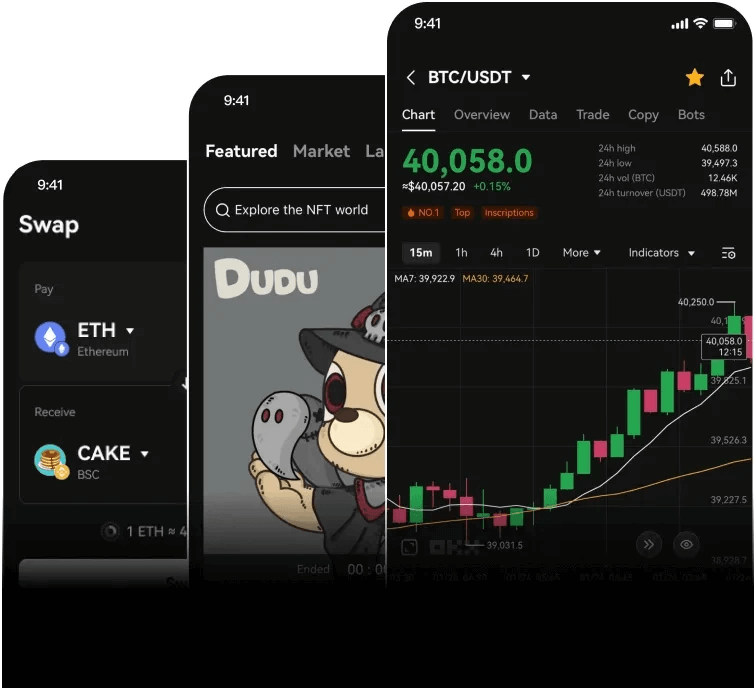
Once your wallet is set up, visit a popular Binance Chain DEX like PancakeSwap (the leading automated market maker). Click “Connect Wallet” and choose your wallet provider. After connection, you can perform a simple swap: select the token you want to sell and the token you want to buy, enter the amount, and review the price quote. The DEX shows slippage tolerance and the estimated gas fee. If the terms are acceptable, confirm the swap transaction in your wallet. Always double-check the token contract address to avoid scams, as any user can create tokens on BNB Chain.
Beyond swapping, DEXs offer liquidity pools. To provide liquidity, navigate to the “Liquidity” or “Farms” section. You deposit an equal value of two tokens (for example, BUSD and BNB) into a pool, and you receive LP tokens representing your share. These LP tokens can then be staked in a “Farming” or “Yield Farm” contract to earn additional rewards. Be aware of impermanent loss—the risk that the ratio of token prices changes unfavorably while your funds are locked.
Other common operations include staking single tokens (often called “Syrup Pools” on PancakeSwap), where you lock a token to earn interest or governance tokens. You can also use limit orders on some advanced DEXs, but most BNB Chain DEXs are order-book based only on derivatives platforms. For trading groups that rely on price impact, you may use a DEX aggregator like 1inch to route trades across multiple DEXs for better rates.
Security is paramount: never share your private key or seed phrase, and always confirm you are interacting with the official DEX website (check for a verified social media presence and audits). Use a separate wallet for active trading and keep larger holdings in cold storage. Also, monitor the transaction gas price—if the network is congested, you may need to increase the limit to avoid failures.
Finally, to exit a position, simply reverse the operation. To close a swap, do the opposite trade. To remove liquidity, go to the Liquidity management screen, select your LP token pair, and click “Remove.” The tokens (with any accrued fees) are returned to your wallet. For staked assets, first unstake them, then claim any rewards, and finally swap or transfer as needed.
Practice first with small amounts to understand slippage, transaction confirmation times (typically 3-5 seconds on BNB Chain), and wallet signing steps. Once comfortable, you can explore more advanced strategies like leveraged yield farming or auto-compounding vaults. Remember that all actions on a DEX are final and irreversible due to blockchain immutability—always double-check every input before confirming.

发表评论